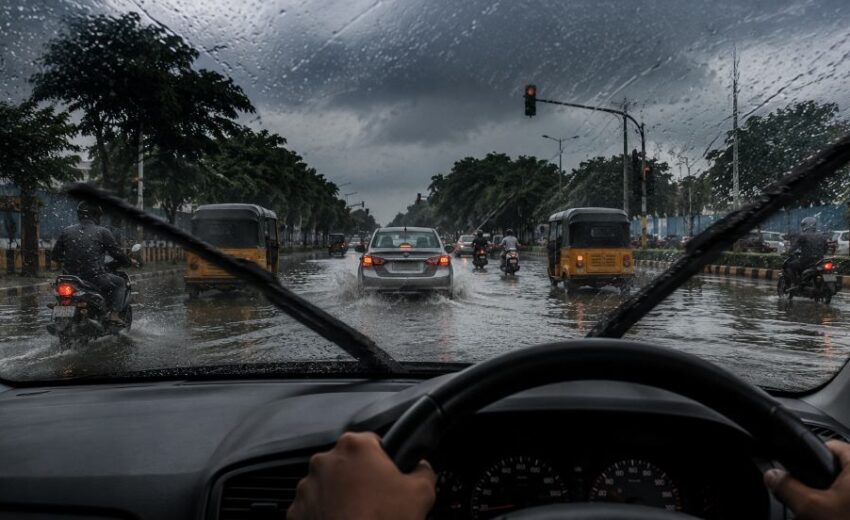
Waterlogged roads are part of every city monsoon! Whether you’re driving through the busy streets of Mumbai. Navigating waterlogged roads in Navi Mumbai. Handling heavy traffic in Bangalore. Crossing busy junctions in Chennai. Or driving through sudden downpours in Pune. The challenge is rarely just the rain. And every driver faces the same question.
Should I drive through… or should I avoid it?
At Edwins Art of Driving we teach something different. And before you even think about driving through a flooded road? You need to understand what you are looking at. And what you are driving on. Because not every waterlogged road is safe to cross. And not every situation requires you to keep moving. Good driving starts with good judgement. When your spacing is better… When your judgement is stronger… When you understand how your vehicle behaves in changing conditions… You stop relying on luck. You start relying on skill.
The Biggest Mistake Happens Before You Enter the Waterlog
Most drivers become cautious only after the car is already in the water. By then blunder has already been made. The better question is: How deep is the waterlog? What is the traffic doing? Are other vehicles moving through comfortably? Or are they struggling? Is there another route that is safer? Good drivers observe first. They don’t simply follow the vehicle in front.
Why Panic Makes Waterlogged Roads More Dangerous
The real problem begins when drivers panic. Some brake suddenly. Some accelerate aggressively. Others try to change direction halfway through. In uncertain conditions, smooth and predictable control becomes far more important than hurried decisions. That is why defensive driving is so valuable during the monsoon.
Reading the Road Is More Important Than Crossing It
One of the biggest lessons we teach at Edwins Art of Driving is that roads are constantly giving you information. During monsoon? That information becomes even more important.
The movement of surrounding traffic.
The behaviour of larger vehicles.
The flow of water.
The condition of the road ahead.
Drivers who learn to read these signs rarely find themselves making rushed decisions.
Why Proper Training Makes the Difference
At Edwins Art of Driving, we don’t teach learners to memorise rainy-day rules. We teach them to understand changing road conditions. Through defensive driving. Real-road exposure. And structured judgement training. Learners develop the confidence to make better decisions, even when the road becomes unpredictable. Because the safest decision is not always about getting through the water. Sometimes, it is about knowing whether you should enter it at all.
Connect with Edwins Art of Driving and discover how structured training prepares you for real roads, real weather and real driving situations.
FAQs
How can I drive through waterlogged roads safely? Drive only after assessing the road conditions, maintaining smooth vehicle control and making safe, well-informed decisions.
What is the biggest mistake drivers make on waterlogged roads? Many drivers enter flooded roads without judging the water level, surrounding traffic or the safest route ahead.
How does defensive driving help during the monsoon? Defensive driving helps you anticipate hazards, read changing road conditions and make calmer decisions in unpredictable weather.